Introduction
The history of Buddhism in the Western world is marked by various individuals and organizations that have played pivotal roles in introducing and spreading Buddhist teachings. One such figure is NUMATA Yehan, whose journey from adversity to a life mission in Buddhism led to the establishing of the EKŌ Center of Japanese Culture in Germany. NUMATA Yehan’s early life was characterized by hardship, as he pursued education in the United States while facing financial challenges. At the age of 22, he contracted tuberculosis, a seemingly incurable disease at the time. In his darkest moments, Yehan encountered the teachings of Venerable Shinran, which transformed his outlook on life and marked the beginning of his spiritual journey. NUMATA Yehan’s recovery from tuberculosis became a turning point in his life. He developed a profound appreciation for life and a strong sense of mission to share Buddhist teachings with people around the world. This newfound purpose drove his subsequent actions and initiatives.
Foundation of Mitutoyo
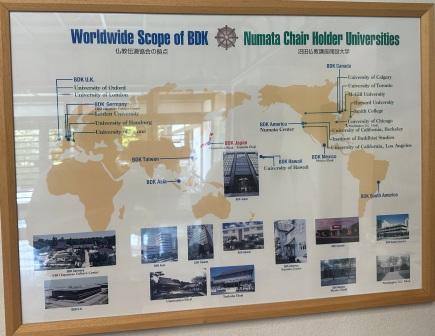
In 1934, Numata Yehan founded Mitutoyo, a company specializing in precision measuring instruments. The establishment of Mitutoyo served as a financial platform to support his vision of promoting Buddhism globally. The profits generated by the company were channeled into his mission.In 1965, Numata Yehan founded the “Society for the Promotion of Buddhism” (Bukkyō Dendō Kyōkai, or BDK) in Tokyo, Japan. This organization played a crucial role in furthering the dissemination of Buddhist teachings and research.
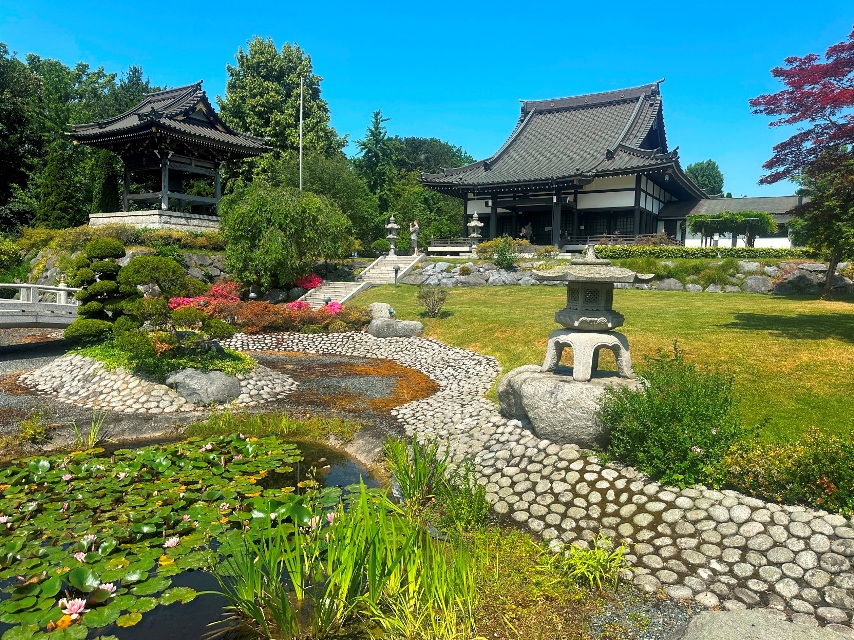
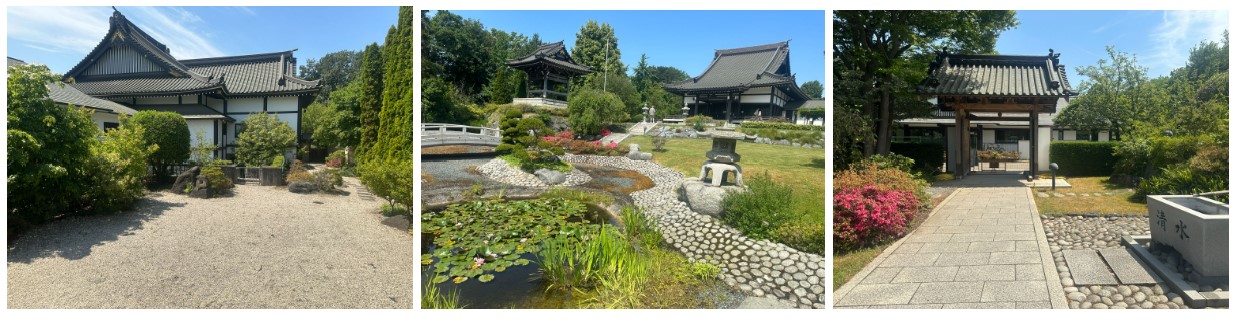
The EKŌ Center of Japanese Culture, often abbreviated as the EKŌ Center, is a prominent cultural and educational institution located in Düsseldorf, Germany. Established in 1988, the center was founded by Numata Yehan (1897-1994), the visionary founder of Mitutoyo Corporation, with the mission of promoting Buddhism and Japanese culture in Europe and contributing to global peace through cultural exchange and interfaith dialogue. The EKŌ Center serves as a bridge between Eastern and Western cultures, aiming to deepen the understanding of Japanese culture, particularly that which is rooted in Buddhism. It offers a wide range of activities and initiatives that encompass the dissemination of Buddhist teachings, scholarly research, and the promotion of mutual understanding among people of diverse faiths and backgrounds. One of the center’s fundamental objectives is to publish and distribute Buddhist texts in both modern Japanese and foreign language translations, making these teachings accessible to a global audience. In addition, it actively supports projects related to Buddhist studies and cultural research.The EKŌ Center is not limited to Buddhist activities alone; it actively engages in dialogue and exchange with various religious traditions. It strives to be an institution that fosters harmonious coexistence and mutual respect among people of different faiths, with the belief that such interactions contribute to peace in the world.
Over the years, the EKŌ Center has garnered support from the city of Düsseldorf, Japanese companies and institutions, and religious organizations dedicated to the promotion of Buddhism. With their collaborative efforts, the center consecrated its temple in 1992 and officially opened its doors in 1993. The cornerstone of the EKŌ Center of Japanese Culture in Düsseldorf, Germany, was laid by NUMATA Yehan in 1988. This center was envisioned as a hub for conveying Buddhism and Japanese culture to Europe, particularly Germany. Its mission was not limited to spreading Buddhism alone, but also aimed to deepen understanding of Japanese culture rooted in Buddhism.
The establishment of the EKŌ Center was made possible through collaboration with the city of Düsseldorf, Japanese corporations and institutions, and various religious organizations dedicated to promoting Buddhism. Their combined support allowed the EKŌ Center to consecrate its temple in 1992 and officially open in 1993.
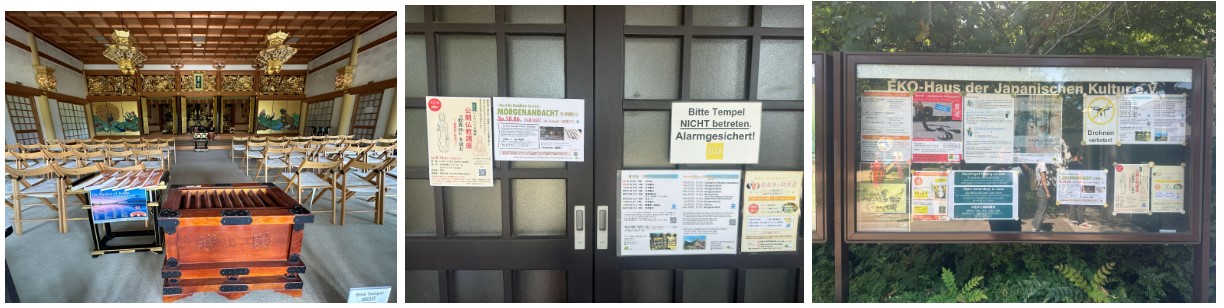
The EKŌ Center engages in a range of activities, including publishing and disseminating Buddhist texts, supporting Buddhist teaching and research, assisting projects related to Buddhism and Japanese culture, and providing function rooms for projects aligned with its objectives. It actively promotes peace, harmony, and mutual understanding among individuals of diverse faiths and backgrounds. The EKŌ Center tries to promote and spread understanding of Japanese culture based on the teachings of Buddha and Japanese Buddhism, and to contribute to the realization of peace in the world through these activities and by deepening mutual understanding among many peoples and different religions. To achieve this goal, the EKŌ Center is dedicated to the following activities:
Publishing and disseminating Buddhist texts both in modern Japanese and in foreign language translations. Activities to promote the teaching of Buddhism, Japanese culture based on Buddhism, and scholarly research (including the endowed “Numata Chairs in Buddhist Studies” in Europe and the activities of the library). Support and assist in projects to promote the teaching of Buddhism and Japanese culture based on Buddhism and scholarly research (including EKŌ and Ōtani Research Scholarships). Activities that serve to disseminate the teaching of Buddhism and Japanese culture based on Buddhism or to promote their understanding, as well as support projects (including the operation of kindergartens) Renting function rooms for the projects in accordance with the founding objectives of the EKŌ Center. Other projects that serve the purposes of the EKŌ Center (including cooperative projects to promote mutual understanding through exchange and dialogues with other religions and peoples and to achieve peace in the world).[3]
The EKŌ Center of Japanese Culture does not see itself as being limited exclusively to Europe in its activities and projects, but is also globally oriented in this regard. The entire staff of the EKŌ Center will work to achieve this goal in a single body. BDK Europa e.V. (Bukkyō Dendō Kyōkai Europe) supports the activities of the Bukkyō Dendō Kyōkai (BDK – Society for the Promotion of Buddhism) in Japan. The latter deals with, for example, translation and distribution of the publication “The Teaching of Buddha”, and also supports research on Buddhism through endowed professorships (“Numata Chair for Buddhist Studies”) and Buddhism centers at European universities (e.g., Numata Center for Buddhist Studies at the University of Hamburg). BDK is a non-sectarian organization and, therefore, does not adhere to one particular denomination of Buddhism. Rather, it endeavors to promote and propagate Buddhist wisdom found in Buddhist history and cultures by developing a wide range of activities and programs. Ultimately, BDK wishes to contribute to the achievement of global peace and harmony.
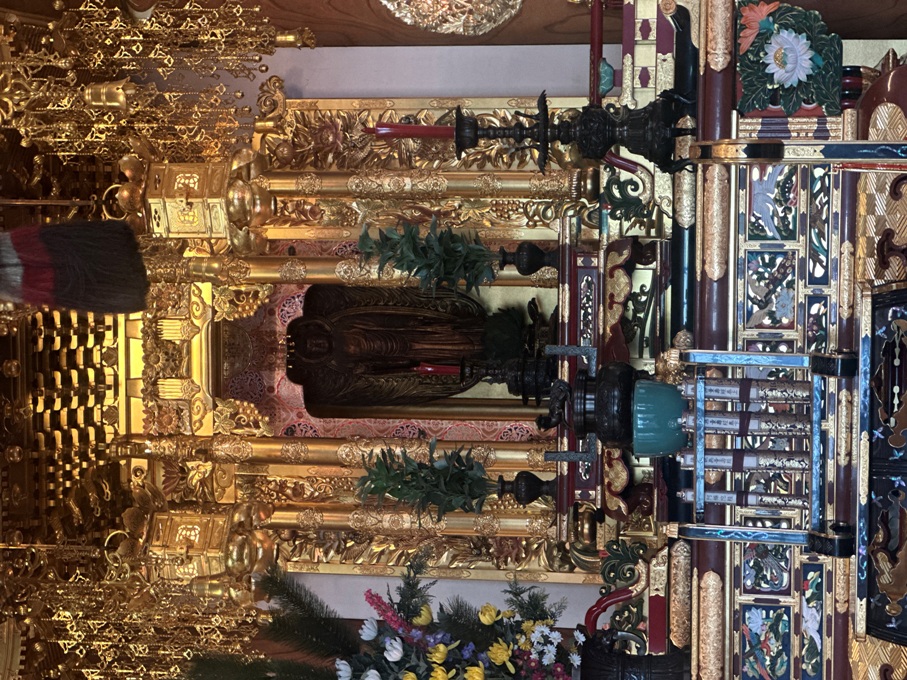
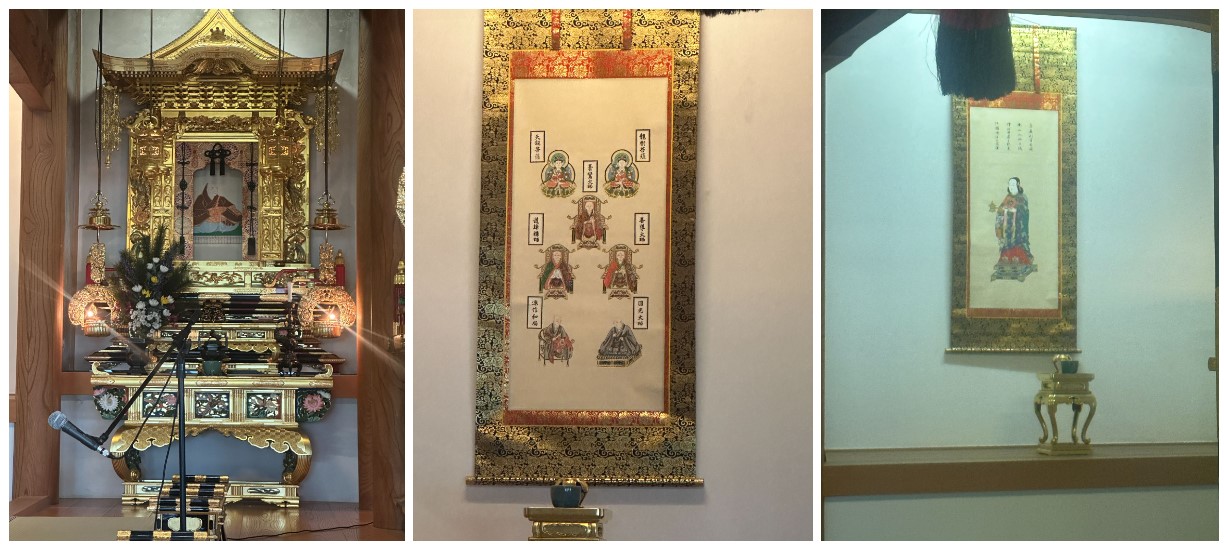
Before the arrival of Buddhism in Japan, there were local cult religions like Shinto and others. The Japanese society adapted those religions, and their belief system was rooted in the culture. In the 5th century BC, Buddhism spread to Japan from China and Korea. After the acceptance of the Japanese imperial court, Buddhism became popular among the people of Japan. The popularity of Buddhism was reflected in art and crafts. During the Heian period wooden sculptures were usually carved out of a single tree trunk, often Japanese cypress (hinoki). By the later Kamakura period they were being assembled from several pieces of wood, a technique called yosegi-zukuri that allowed for more complex compositions as well as greater depth of carving. Wood allowed more subtle lines compared with stone or bronze casting.[^1]
[1] https://brill.com/view/journals/jrj/10/2-3/article-p135_2.xml
[2] https://www.christies.com/en/stories/age-of-enlightenment-an-introduction-to-early-japa-25d8696b4fdb4b92ae1471bf4ccd23da
[3] https://eko-haus.de/en/about-us/purpose-history/#j2