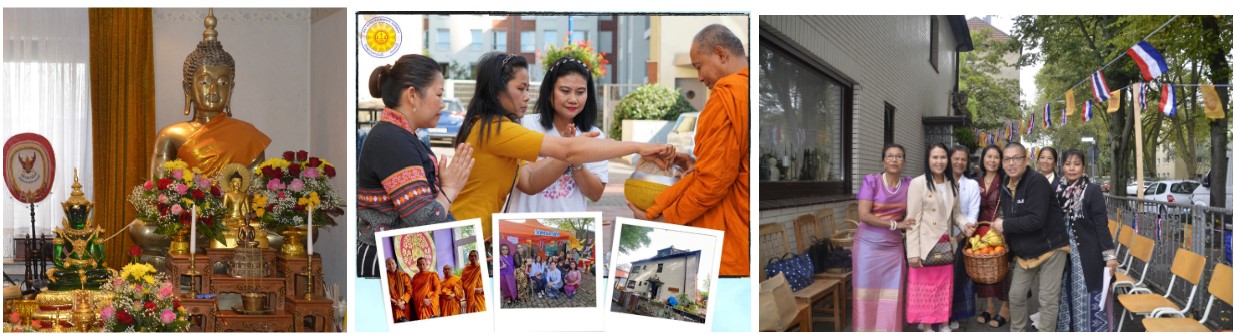
Wat Buddha Samakhee temple is located in Duisburg, Germany. This temple was established by a group of Thai immigrants and Thai inhabitants of Germany for a long time. On 2020.03.20 They moved from Düsseldorf to Markusstr. 44, 47055, Duisburg. It’s difficult to find a temple like in Thailand, but people try to bring the same atmosphere here in Germany. They have rented a house, then, converted it into a temple, with a worship hall and a small dining place as a temple. Buddhism and Thai culture are integrated into Thai society. Buddhist monks play a pivotal role in binding Buddhism and Thai culture. The temple is also a medium, where people can join and fulfill their cultural traditions. The main objective of the temple is to provide shelter for monks. Monks’ main duties are to give advice and blessings. Besides these activities, the temple also provides a platform for their community to celebrate traditional culture. Temples in Thailand have played multifaceted roles throughout history. They served as centers of education, where religious knowledge, reading, writing, and various other subjects were taught. Temples have also been the cradle of Thai customs and traditions, serving as focal points for local communities. In contemporary times, temples primarily function as places of religious learning and for performing religious ceremonies and rites. These include offerings, ordinations, and cremation rituals.
Organization structure
This temple is a non-profit organization run through charity and donations from local and community people. In order to run this organization, a group of devotees has to make a request to the Thai Missionary Union(Dhammaduta sangha) to provide a monk. The Thai Missionary Union is the administrative part that provides monks and support to the temple aboard, which is also under the supervision of the Foreign Affairs Ministry of Thailand. After the request, there will be a selection of Monks then after approval from Sangha Committee only monks will be sent. 1:
Monks responsibilities
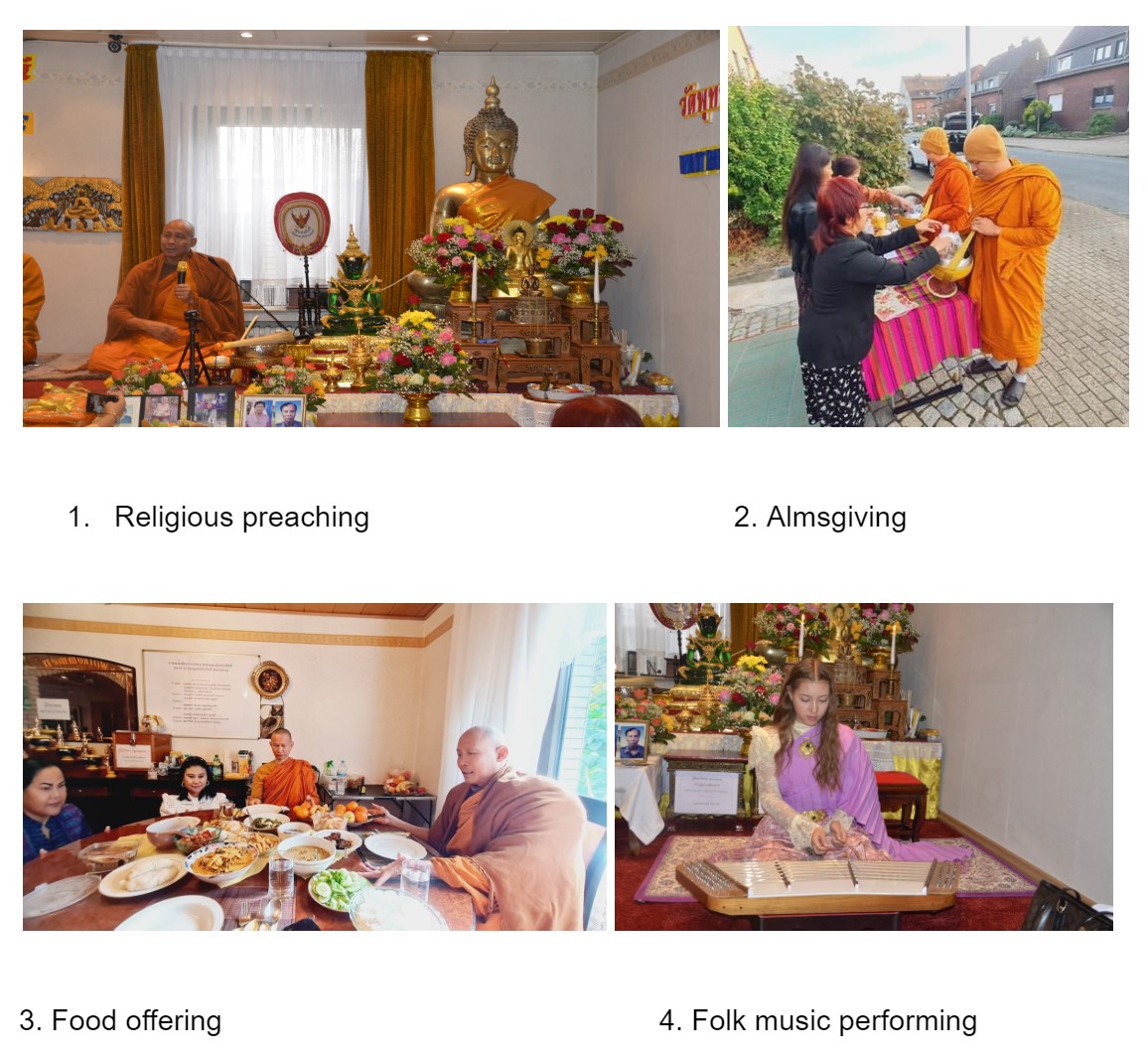
- Monks are responsible for maintaining temple activities, they should perform daily rituals like Chanting, almsgoing, accepting food offered by devotees, and giving blessings.
- Monks are also sometimes responsible for temple administration. Like care taking temple maintenance, cleaning the temple’s surroundings, and handling the temple budgets.
- Besides these duties, monks conduct meditation sessions and promote Theravada Buddhism to community members and their children.
- In Thai tradition, monks are not only spiritual leaders but also family counselors who give advice in their daily lives.
Devotee’s duties
Support the temple financially and logistically too. Try to fulfill temple requirements in goods. Look after monk’s basic needs like food and other goods Help in administrative activities of the organization. Participating and organizing in spiritual and cultural programs
 [2]:
[2]:
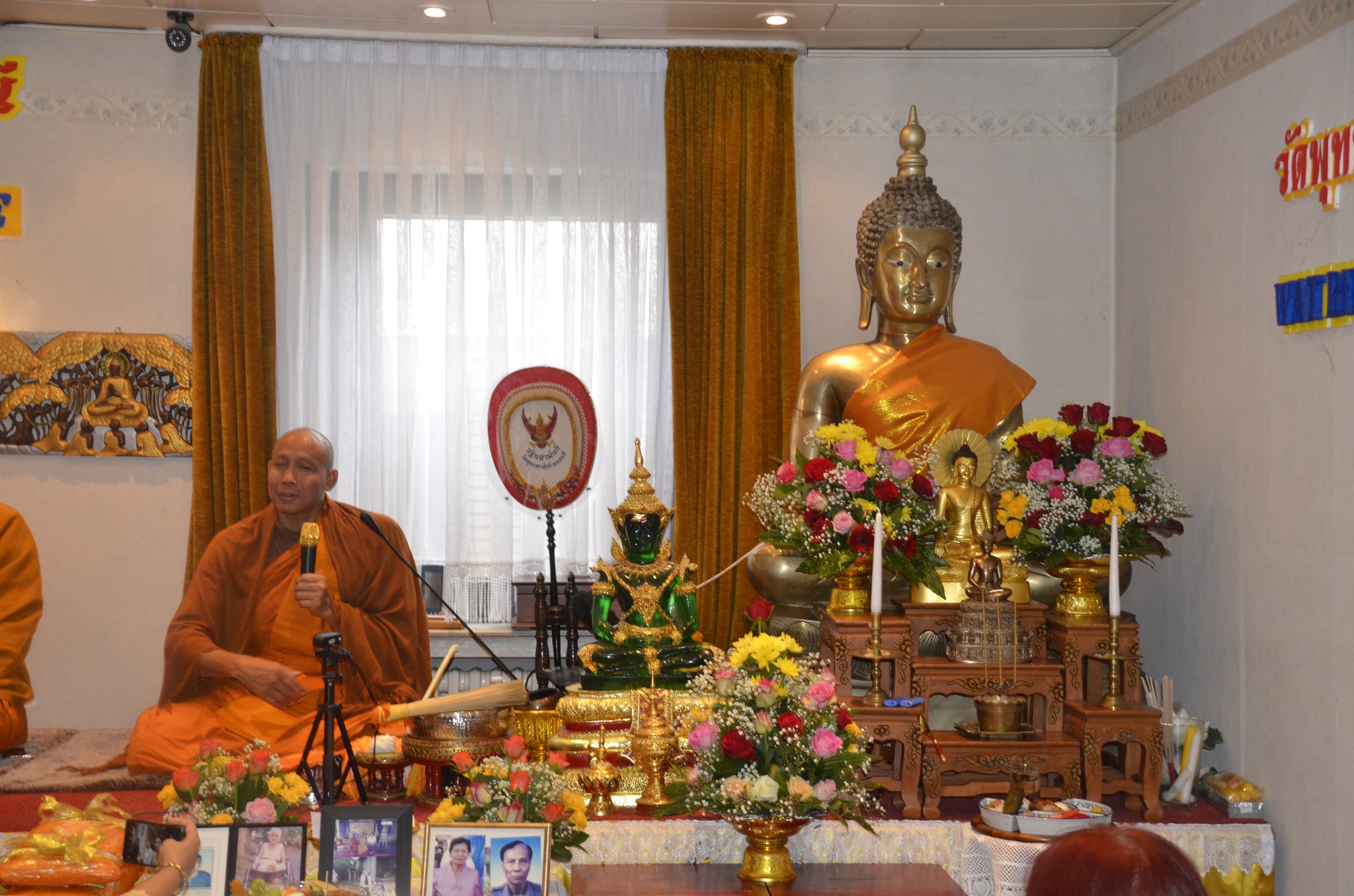
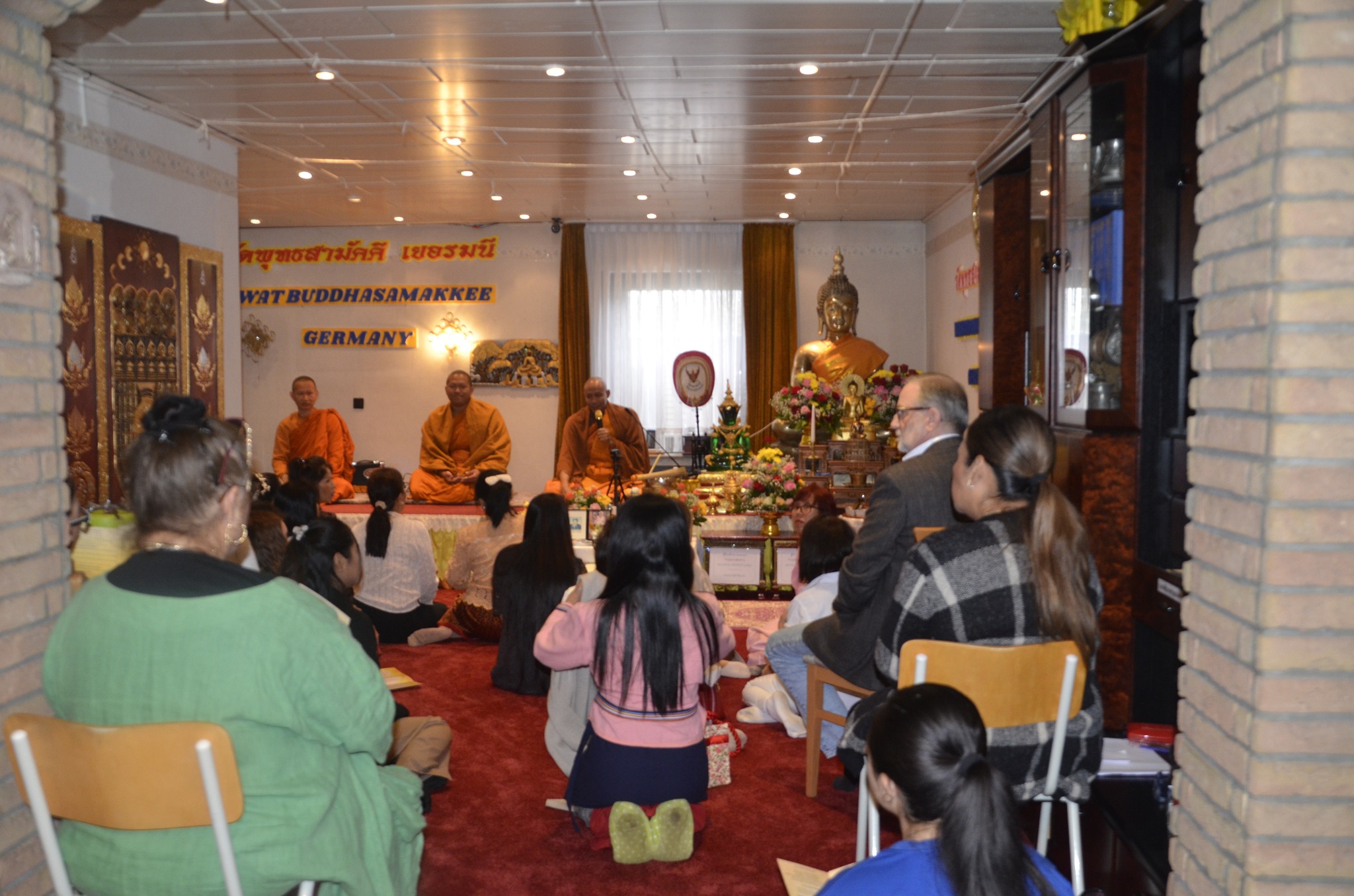
The arrangement of the temple praying hall typically follows a traditional and symbolic layout that reflects Thai Buddhist principles and rituals. The central focus of the praying room is the altar. The altar typically features a prominent Buddha statue and other smaller Buddha statues in layers. The Buddha image represents the enlightened state and serves as the main object of veneration. In addition to the main Buddha image, there is a guardian deity. In front of the altar, there is usually a table where worshipers can place offerings. These offerings often include candles, incense sticks, flowers, and food. Incense burners are placed near the altar. Burning incense is a common practice in Buddhist rituals and symbolizes the purification of the mind and the offering of fragrant scents to the Buddha and other deities. There are Seating Arrangements for monks and devotees. There is a kind of little height stage for monks and cushions on the floor for worshipers to sit or kneel during ceremonies and meditation
The main objective of Wat Buddhasamakkee is to promote “Theravada Buddhism” so, they request monks from their main temple in Thailand to take care of the temple and to educate people about Theravada Buddhism and meditation practices. Besides religious activities, the Temple also plays an important role in preserving and promoting Thai culture. Like Teaching the Thai language, cultural dance, music dramas, folk art, and history of Thailand. The temple also provides a platform as a meeting place for Thai people promotes integration in Germany, and is also a center for German-Thai Friendship.
 2:
2:
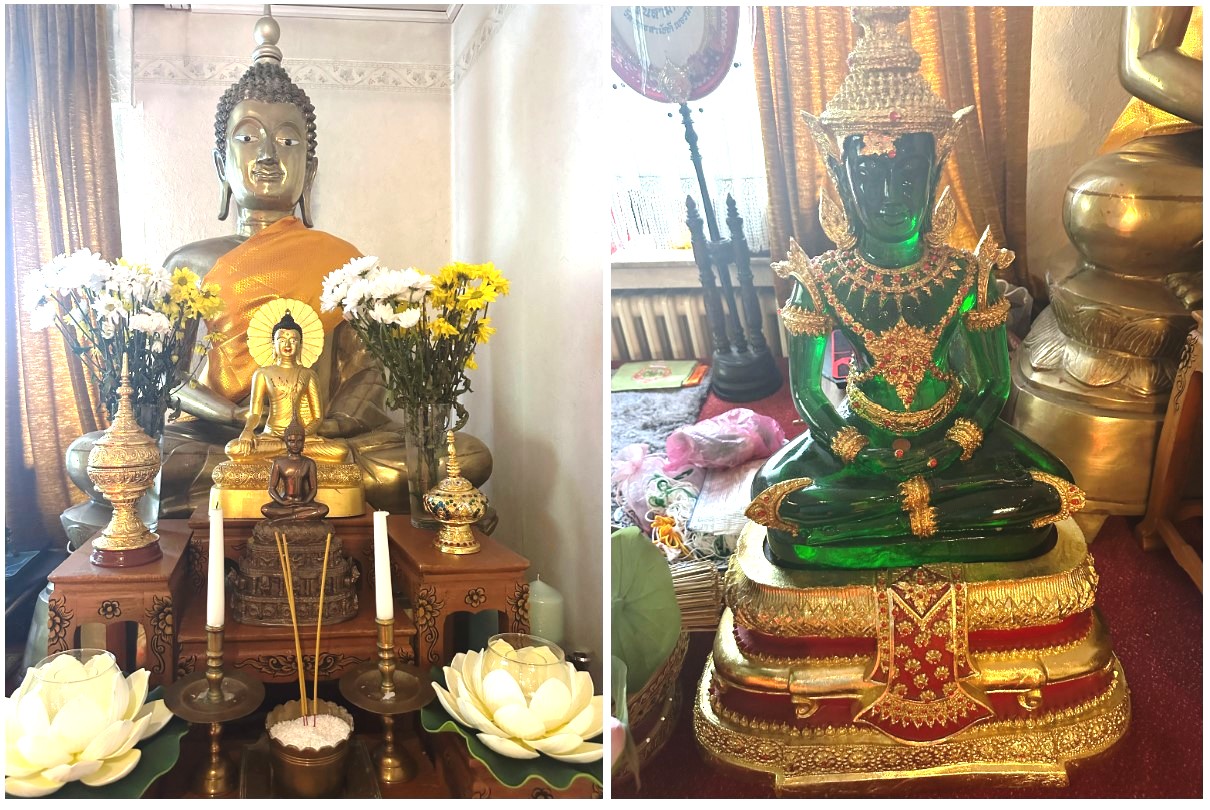
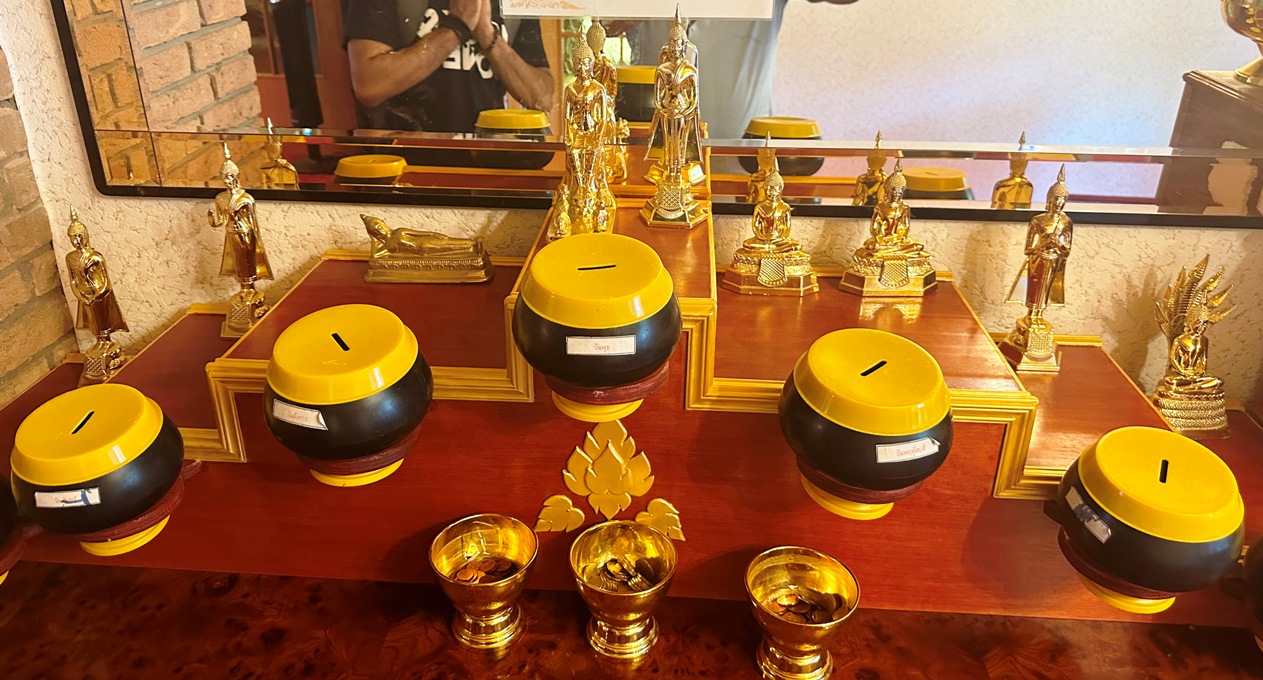
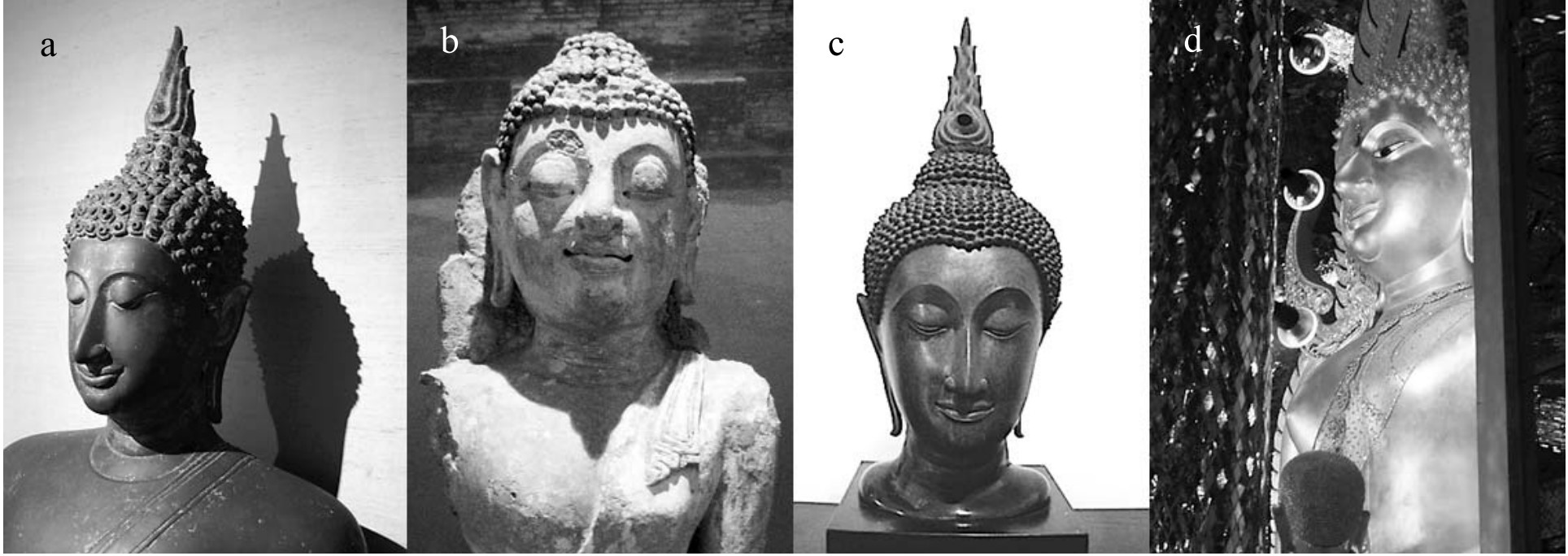
With the spreading of Buddhism, the representation of Buddha in the form of art and iconography was also carried out. The statue which is displayed in Wat Buddhasamakke shows the characteristics of the Sukhothai style. The evolution of Buddha statues during the Sukhothai period (1238–1438 CE) in Thailand has a distinct artistic style that emerged, and continues till today. This style, characterized by its combination of Thai ethnic features with a sense of serenity and tranquility, is highly presented. Softly rounded, elongated faces, The eyebrows are highly arched with a sharply creased, sculpted curve that continues down the ridge of the nose, Parrot-like nose, hooked. In some cases, the ridge is very sharp and narrow. The eyes are delicately curved and stylized, with re-curved upper eyelids and a sharp crease between the eyelid and the eyebrow. The eyes are downcast and slightly open. The lips, cheeks, and chin are generally lean and slender. Suthothai art is collaboration of four schools of art.(the general group, the Wat Trakuan, the Kamphaengpet, and the Phra Phutta Chinnarat.Sukhothai art is an evolution development form of sculpture where that reflects some characteristics of pala style from India, The topknot or ushnisha, elaborate finials of various designs are added which is influenced by Sri Lankan style. The eyes of Pagan-style sculptures have a more obviously downward gaze (Galloway 2006, 200); which also can be seen in Suthothai sculpture. The Sukhothai style is refined and elegant in ways that captured features are predominant. In sumup, the Sukhothai style emerged by watching the other styles blend into their style.
 3:
a: General Group, late thirteenth–fourteenth century, at Ramkhamhaeng National Museum, Sukhothai. b: Wat Trakuan, late thirteenth century, at Ramkhamhaeng National Museum, Sukhothai. c: Kamphaengpet, fourteenth–fifteenth century, at National Museum, Bangkok. d: Phra Phutta Chinnarat, fourteenth– fifteenth century, at Wat Phra Si Ratana Mahathat.
3:
a: General Group, late thirteenth–fourteenth century, at Ramkhamhaeng National Museum, Sukhothai. b: Wat Trakuan, late thirteenth century, at Ramkhamhaeng National Museum, Sukhothai. c: Kamphaengpet, fourteenth–fifteenth century, at National Museum, Bangkok. d: Phra Phutta Chinnarat, fourteenth– fifteenth century, at Wat Phra Si Ratana Mahathat.
References: